
Robotic Sanding
Robotic Sanding
Sanding doesn't have to be hard.
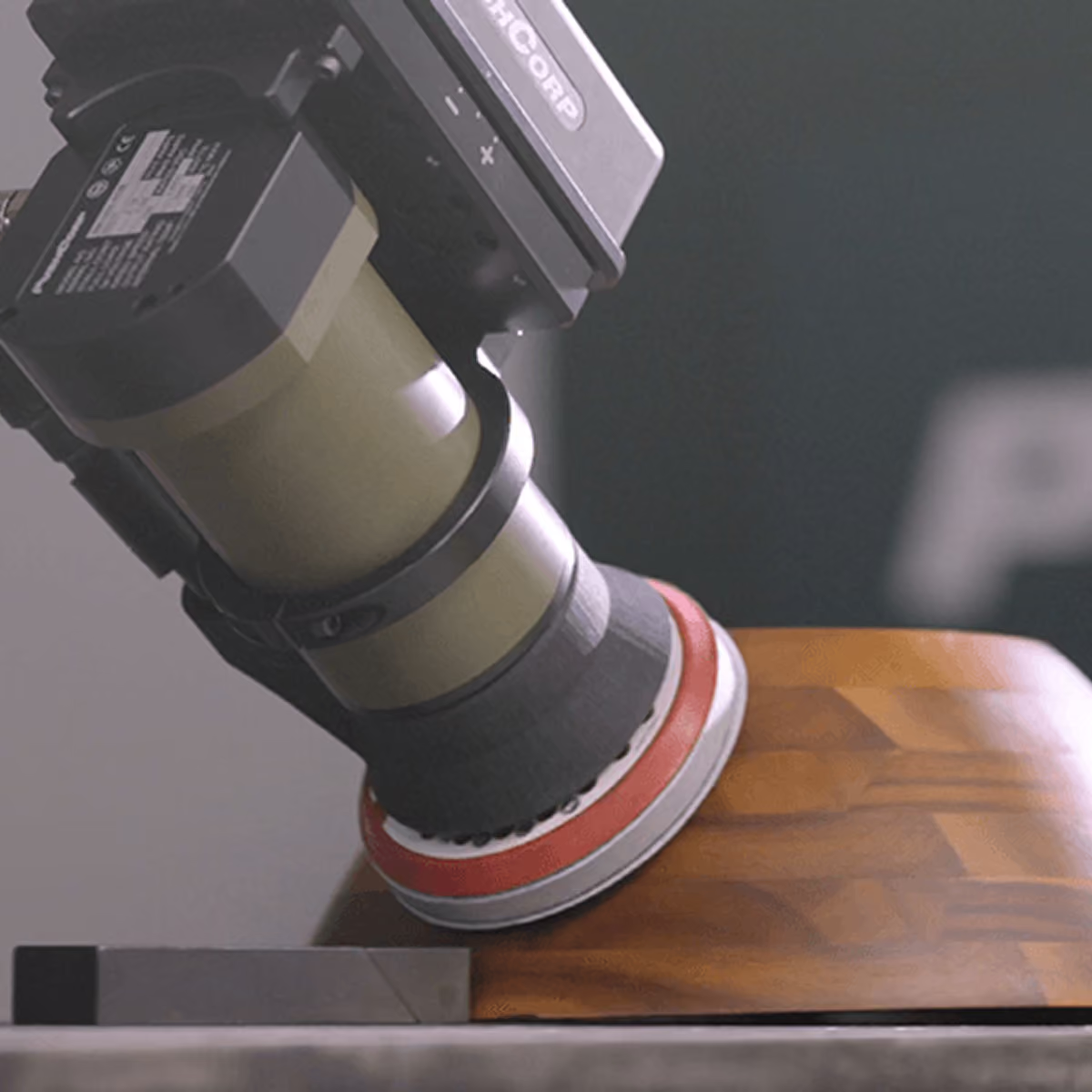
Force-controlled robotic sanding holds steady pressure across contours on wood, composites, and metal, extends abrasive life by 200 to 300 percent, and takes the dust and vibration off your operators.
The Problem
The Problem
Hand sanding is where good parts turn into rework
Sanding looks like the easy step. It is the one that sends parts back.

Finish drifts part to part
No operator holds the same pressure through a shift, so scratch pattern and sheen wander. Swirl marks and burn-through on edges show up after coating, when the part is already scrap.
Abrasives die before their rated life
Uneven pressure loads up discs and belts early. You buy more media than the job needs, and every paper change is a cell standing still.
Sanding is the job nobody wants
Vibration, dust, and shoulder fatigue make this the station with the highest turnover on your floor, and the people who do it well are the hardest to replace.
What Changes on the Floor
What Changes on the Floor
Steady pressure on every contour. The same finish every time.
Force-controlled robotic sanding holds steady pressure across contours on wood, composites, and metal, extends abrasive life by 200 to 300 percent, and takes the dust and vibration off your operators.
Up to 40 mm of linear stroke keeps contact on any contour
200 to 300 percent longer abrasive life
Automated paper changers swap worn discs without stopping the cell

Customer STORY
Customer STORY
400% more output
“After implementing the robotic solution, our welders were able to solely focus on welding. The entire shop saw a big boost in efficiency, morale, and throughput.”
Backwoods Adventure Mods builds heavy-duty off-road bumpers and racks. Automating weld grinding and random orbital sanding raised output by up to 400 percent and put their welders back on welding.
Process
Process
How to get started
You don't have to work out abrasive grit, force settings, and cycle time on your own. We prove the process on your parts before you commit to anything.
Talk to our engineers
Send us the part, the material, and the finish spec you are chasing. A PushCorp application engineer walks the process with you, with nothing to buy.
Prove it in our Demo Lab
We run your real parts with the right spindle, abrasive, and force setting, then tune pressure and cycle time until the finish repeats.
Run it in production
Every part leaves the cell with the same scratch pattern and sheen, abrasives last two to three times longer, and your people are out of the dust.
Ready to automate?
Talk to a PushCorp engineer about your sanding application
Bring your part, your finish spec, and your cycle-time target. We will tell you honestly whether force-controlled robotic sanding fits.